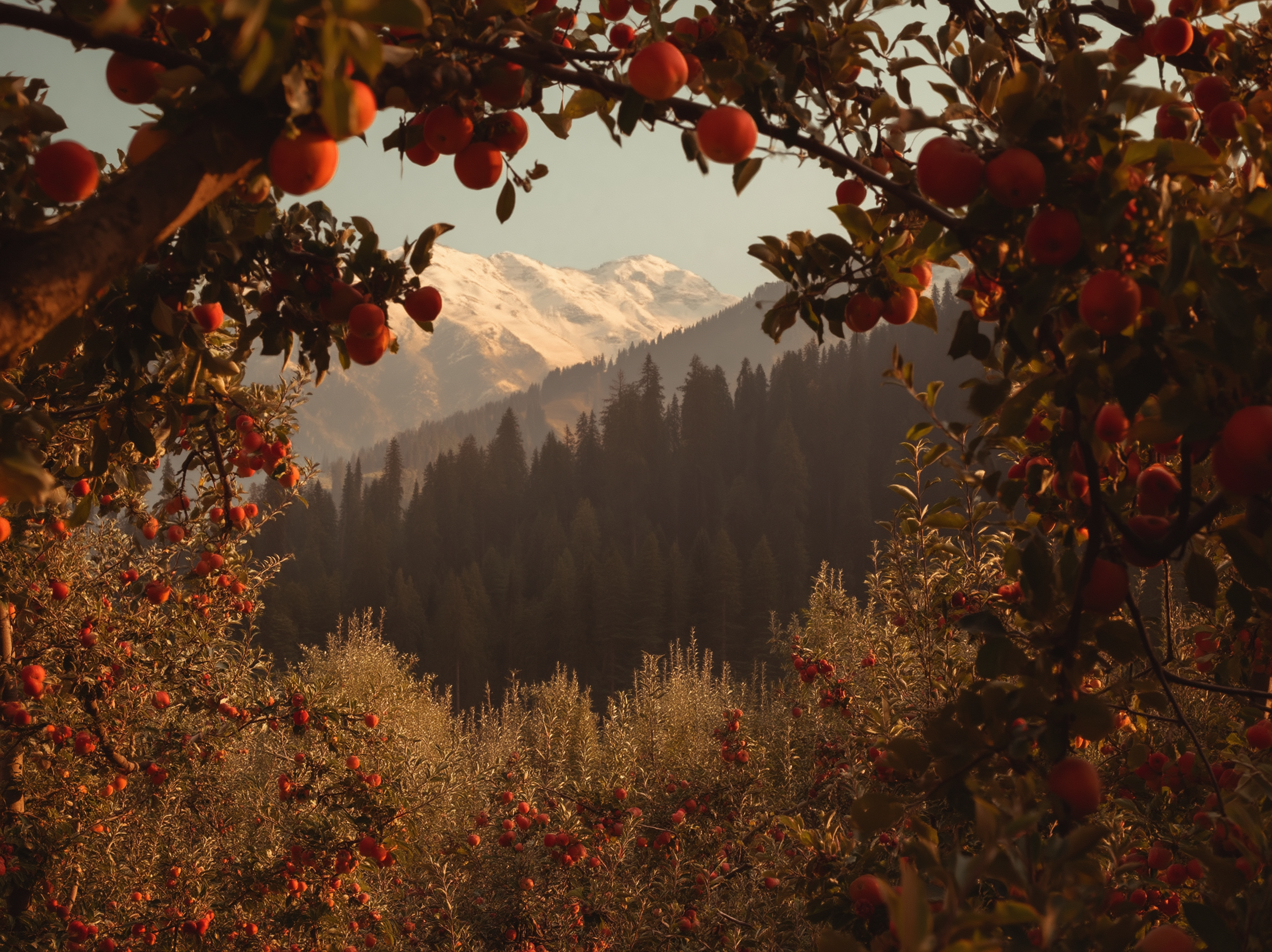
The most direct expression of what this project is for.
Food at Nilsar is not a service category. It is where landscape, community, and tradition find their most concentrated daily expression.
Why food is a primary commitment
Food at Nilsar is the most direct and daily expression of the project's founding logic. The landscape, the local community, the seasonal rhythms of the Kashmiri mountain year, the traditional craft of the valley — all of these find their most concentrated expression in what the kitchen does every day.
The food programme cannot be developed as an afterthought or resolved through hiring a good chef. It requires its own system: a supply chain connected to local farms and village producers, a kitchen philosophy that is genuinely rooted in Kashmiri food culture, an on-site growing programme in the orchard and kitchen garden, a bakery anchored by the kandurwan tradition, and a produce brand that extends the food system beyond the property boundaries.
Nilsar has a structural advantage here. Arsalan Kamil — co-founder and equal partner — built Ovenfresh, a bakery and food business with eight outlets across Srinagar. He understands what it takes to get bread right at scale, to manage suppliers in Kashmir, and to build a food operation that works day after day. This is not theoretical food knowledge. It is operational, proven, and local.
"Every meal served at Nilsar is either evidence of the community sourcing commitment or evidence that the commitment is not real. There is no neutral position on this."
The Kandurwan
The kandurwan is a traditional Kashmiri wood-fired clay oven, used for centuries to produce the bread that is central to Kashmiri daily and ceremonial food life. The most iconic product is tchot — a ring-shaped bread baked directly on the clay walls of the oven — along with a range of enriched and flatbreads whose character comes specifically from the intense, smoke-tinged heat of the clay-fired process.
At Nilsar, the kandurwan is the centrepiece of the food programme. It should be operational before the first guest arrives. The women who will operate it — sourced from the surrounding community, bringing inherited knowledge of this tradition — should be employed and working before the property opens. Bread should be made at Nilsar before guests stay there.
The bread-making process should be accessible — not as a scheduled demonstration, but as an organic part of the property's daily life. A guest who walks through the kitchen courtyard before breakfast should be able to see the bread being made. A child who is curious should be able to touch the dough. And the bread that arrives with every meal is the bread from this oven — the daily bread of the place.
The orchard and kitchen garden
The Nilsar site has productive orchard land and the capacity for a substantial kitchen garden. Both are central to the food programme and developed as working productive systems, not as landscape amenities.
The apple orchards produce fruit in the September–October harvest window. Nilsar's kitchen uses this fruit directly — in desserts, preserves, juices, and cooked dishes. Apple varieties grown in the Tangmarg belt include local heirloom varieties that have genuine character worth preserving; the orchard programme documents and protects these varieties rather than replacing them with high-yield commercial stock.
A well-managed kitchen garden in the Kashmir mountain climate can produce soft herbs, leafy vegetables, root vegetables, and edible flowers across the growing season. The kitchen garden at Nilsar supplies the kitchen with fresh produce that genuinely changes with the season — not a fixed menu supplemented by garden garnishes, but a kitchen programme that responds to what the garden produces each week.
"The season is the menu. What the kitchen garden and orchard produce, what the local farms can supply in a given week, what is at its best in the valley in that specific month — these should drive the menu more than any fixed recipe structure."
The produce brand
The Nilsar produce brand is the extension of the food system beyond the property. It converts the surplus and abundance of the site and the surrounding community into products that can be sold to guests at departure, through the website, and eventually through specialist retailers.
Apple preserves and jams. Kashmir honey from local beekeepers with traceable origins. Kahwah-flavoured biscuits and dried fruit breads. Saffron from documented Kashmiri sources. Each product genuinely sourced and traceable — not a gift-shop afterthought, but a serious expression of the community and land system.
The Tebay Services model is the reference point: a motorway services complex on the M6 in Cumbria that became famous because it took its relationship with local farms seriously. People drive out of their way to stop there. The produce became the attraction. Nilsar should achieve the same.
Kahwah and the food service philosophy
Kashmiri hospitality has a food ritual at its centre: kahwah, the spiced green tea prepared with cardamom, cinnamon, and saffron that is the universal gesture of welcome. At Nilsar, kahwah is the beginning of the food story — a moment that introduces the guest to the flavour profile and the generosity of the place.
Abundance over restraint. The food should feel generous — bread arriving warm, still fragrant from the oven. Preserves in small jars at breakfast. Seasonal fruit from the garden on a plate before it is asked for. Kashmiri flavour as the primary identity — the wazwan traditions, the slow-cooked lamb and dried vegetable dishes of the mountains, the saffron and walnut idiom. Not a museum of local cuisine, but a kitchen whose flavour vocabulary is genuinely local.
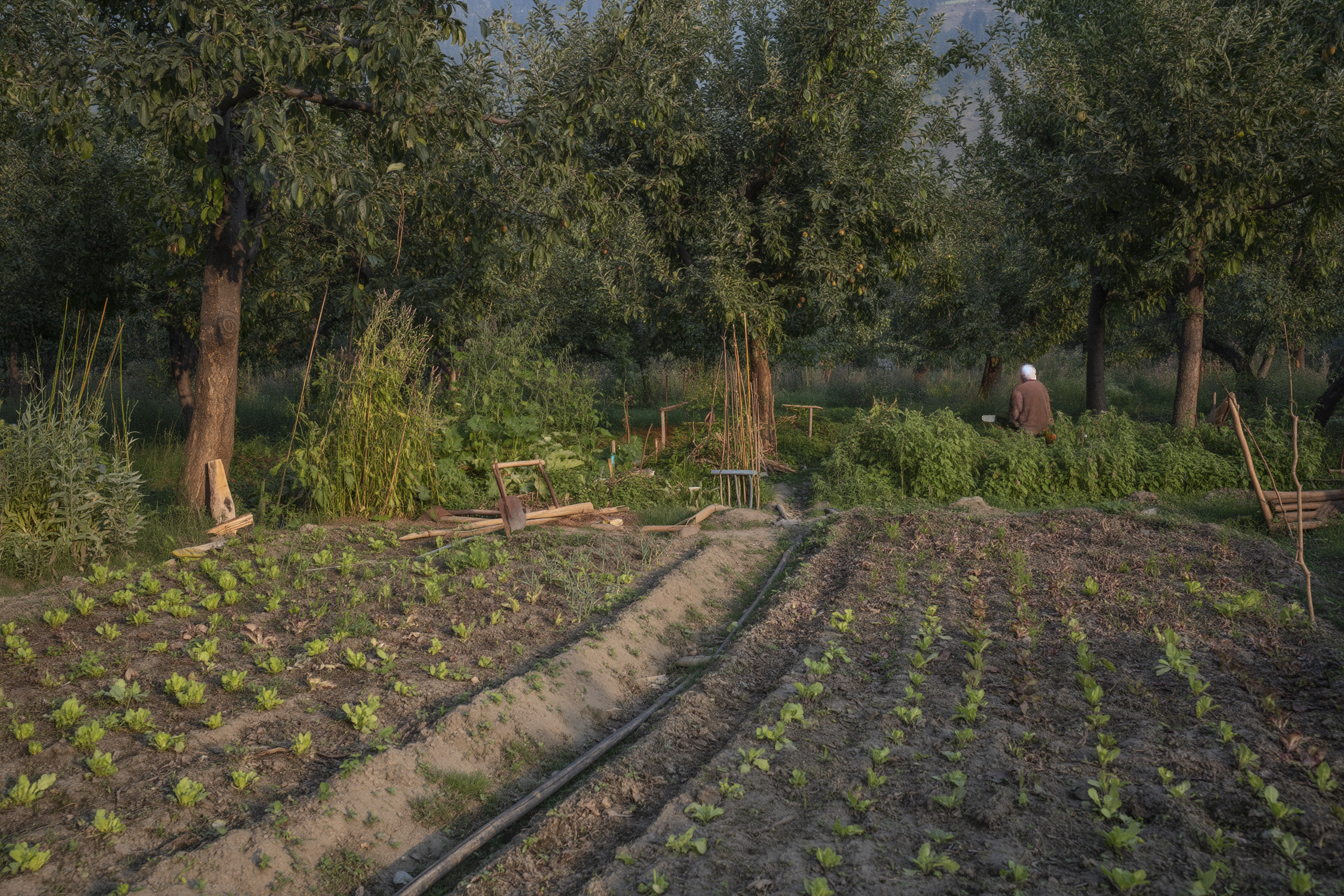
Kitchen gardens and orchard land kept productive, beautiful, and connected to daily life.
Nilsar — Orchards & Gardens